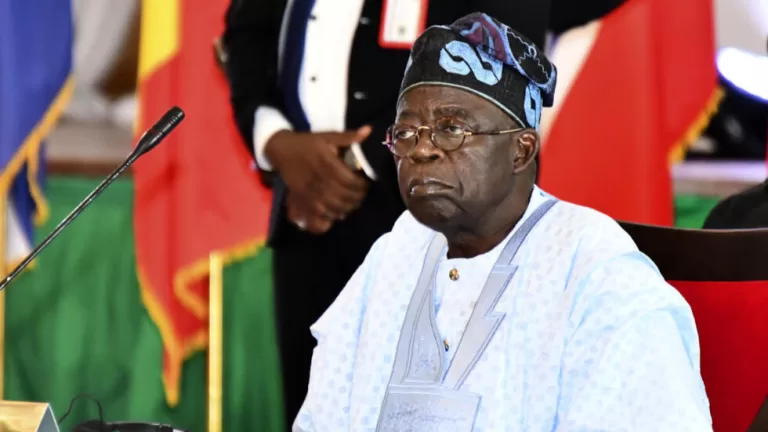

In what many are calling an existential moment for Nigeria, a spiraling economic downturn, rising costs of living, and deepening insecurity are fueling a wave of public frustration and disillusionment with the administration of President Bola Ahmed Tinubu.
From skyrocketing electricity tariffs and fuel prices to rising school fees, bank charges, and rent, ordinary Nigerians are being squeezed on all fronts. Yet, what makes the moment particularly explosive is that these economic shocks are arriving alongside visible signs of elite privilege like reports of the ₦10 billion worth of solar infrastructure to be installed at the Presidential Villa while some of the country’s top hospitals, including the National Hospital in Abuja and University College Hospital (UCH) in Ibadan, remain without reliable alternative power sources.
According to the International Monetary Fund’s World Economic Outlook (April 2025 edition), Nigeria’s GDP has declined from $363.8 billion in 2023 to $188.3 billion in 2025 representing a staggering 48.3% economic contraction in just two years. It’s one of the steepest economic declines in Nigerian history.
For millions of citizens, these are not just abstract statistics. They represent bus fares that have quadrupled, energy bills that don’t come with actual electricity, and education costs that are fast becoming unaffordable.
An Economy in Free Fall
Much of the current hardship is attributed to President Tinubu’s economic reforms, particularly the removal of fuel subsidies and floating of the naira, both of which were initially praised by international observers but have had severe unintended consequences. Inflation is now running well above 30%, eroding wages, and pushing more Nigerians into poverty.
The impact is most visible in daily life:
- Transport costs have surged by over 300% in many parts of the country.
- Rent and food prices have become unbearable for low- and middle-income families.
- Small businesses are shutting down under the weight of unstable currency exchange and high import duties.
Security and Institutional Decline
While economic pain is widespread, rising insecurity has added salt to injury. Many citizens say they feel abandoned as armed robbery, kidnapping, and communal violence continue unchecked in many regions.
There is also growing concern about the state of national institutions, including hospitals and public universities. The absence of solar power in flagship medical centers like LUTH (Lagos), UCH (Ibadan), and National Hospital Abuja raises questions about the federal government’s infrastructure priorities especially as reports show the Presidential Villa was allocated ₦10 billion for solar energy installation.
Leadership Vacuum and Democratic Fatigue
Critics of the administration accuse the ruling APC government of pursuing economic policies without adequate social protection and silencing dissent through political maneuvering. The failure of opposition parties to present a unified and viable alternative has further led to public despair, prompting debates about referendums and constitutional reform.
As the 2027 general election approaches, many young Nigerians who constitute over 60% of the electorate are asking whether simply voting is enough. But others argue that without active political participation, including through parties and grassroots organizing, real change will remain elusive.
What to Take Away From This Story
- Economic Shock Therapy Has Failed Ordinary Nigerians: While the reforms were meant to liberalize the economy, they have largely punished those least able to cope, deepening inequality and hardship.
- Leadership Disconnect Is Driving Public Rage: Extravagant government spending in the face of collapsing public infrastructure has further eroded trust in governance.
- 2027 Is a Crossroads, Not a Guarantee: Without a credible opposition or systemic reforms, elections alone may not deliver change. Political engagement beyond the ballot box is essential.
- Public Institutions Are Near Collapse: With hospitals and schools lacking basics like power, the country faces a long-term risk to human development.
- Referendum and Restructuring Are Gaining Ground: Amid disenchantment with both ruling and opposition elites, the idea of systemic change via referendum or national dialogue is gaining traction among young Nigerians.