
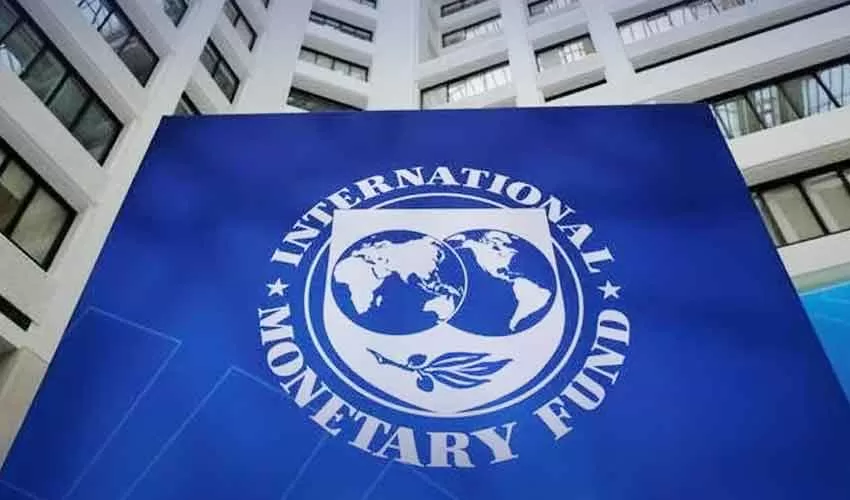
Despite rising tensions over U.S. trade tariffs and escalating market volatility, the global economy is expected to sidestep a recession, according to International Monetary Fund (IMF) Managing Director Kristalina Georgieva.
Speaking in Washington on Thursday ahead of the IMF–World Bank Spring Meetings, Georgieva acknowledged that while the economic outlook has dimmed, the global economy remains resilient enough to avoid a contraction.
“We now expect notable cuts to global growth — but no recession,” Georgieva said, referencing the disruptive impact of U.S. President Donald Trump’s latest round of import tariffs.
The IMF had previously forecast global growth to reach 3.3% in both 2025 and 2026, but that estimate is now under review and expected to be revised downward in the Fund’s World Economic Outlook, due for release on Tuesday.
Trade Tensions Spark Uncertainty
The reintroduction of tariffs by the U.S. has sent tremors through global markets, rekindling levels of volatility not seen since the height of the COVID-19 pandemic. Economists warn the new trade barriers could stifle short-term growth, drive up inflation, and weigh particularly heavily on smaller economies and emerging markets.
Georgieva outlined three key risks linked to the tariff standoff:
- Uncertainty hurts investment:
“It becomes difficult for businesses to plan when they don’t know how much their inputs will cost,” she noted. - Trade barriers hit growth:
“Tariffs, like all taxes, raise revenue at the expense of reducing and shifting activity.” - Long-term productivity suffers:
Protectionism, she said, is especially damaging to smaller, trade-reliant economies.
Call for Policy Discipline and Reform
Georgieva emphasized that global economic resilience hinges on smart policy choices. She urged governments to take domestic action:
- Fiscal responsibility:
Countries should work to reduce public debt gradually and responsibly. - Credible central banking:
A strong commitment to central bank independence is crucial. - Restoring public confidence:
“Perceptions matter as much as reality,” Georgieva warned, calling for efforts to reverse sliding consumer sentiment — particularly in the United States.
Country-Specific Recommendations
The IMF chief also pointed to structural issues in key economies:
- China should pivot away from its export-driven model and stimulate private consumption.
- The United States must address rising government debt and restore long-term fiscal sustainability.
- The European Union should deepen its single market to boost competitiveness.
Trade Policy: A Path Back to Openness
Despite leading an institution historically in favor of open markets, Georgieva acknowledged the evolving dynamics of global trade — but stressed that reform, not retreat, is the way forward.
“In trade policy, the goal must be to secure a settlement among the largest players that preserves openness and delivers a more level playing field,” she said.
She added that progress on both tariff reduction and the elimination of non-tariff barriers is essential to prevent long-term fragmentation of the global economy.
“We need a more resilient world economy, not a drift to division,” Georgieva concluded. “And to facilitate the transition, policies must allow private agents time to adjust and deliver.”